
Triathlon Pacing: The 60-Minute Rule for Racing Smarter

Triathlon Pacing: The 60-Minute Rule: Don’t Play Your Joker Card Too Early
D.P.Ashton BSc (2026)
Through coaching, testing and watching athletes’ race, I have developed a simple rule of thumb, a well-trained athlete has approximately 60 minutes of hard work available above their second lactate threshold, or LT2, within a 24-hour period.
This is not a strict scientific law, and it does not mean somebody can exercise continuously above LT2 for an hour. It is better viewed as a limited allowance that can be accumulated through intervals, race surges, hills and harder efforts.
LT2 is the point where exercise changes from hard but controlled to increasingly difficult to sustain. Once you cross it, fatigue begins building much more rapidly. The farther above LT2 you go, the faster you use up your available reserve.
That is why one minute just above LT2 is not the same as one minute at VO₂ max intensity. As a simple coaching guide, I count one minute of VO₂ max work as roughly two minutes from the daily allowance. This is not a laboratory formula, but it reflects the much greater cost of exercising at that intensity.
A useful guide for accumulated time above LT2 is:
· Developing athlete: 10–25 minutes
· Trained age-group athlete: 20–40 minutes
· Highly trained athlete: 30–50 minutes
· Elite or exceptionally durable athlete: 40–60 minutes
Reaching 60 minutes is therefore very good. It is more realistic for an athlete who trains consistently and has developed a high level of endurance.
This idea also helps explain double-threshold training. Athletes may complete two controlled threshold sessions in one day, but they do not normally perform a continuous hour well above LT2. The work is divided into repetitions, with recoveries between them, and usually split across two sessions.
The joker card in triathlon
I think of LT2 as the joker card in a triathlon. You can play it, but once you do, it may affect everything that follows.
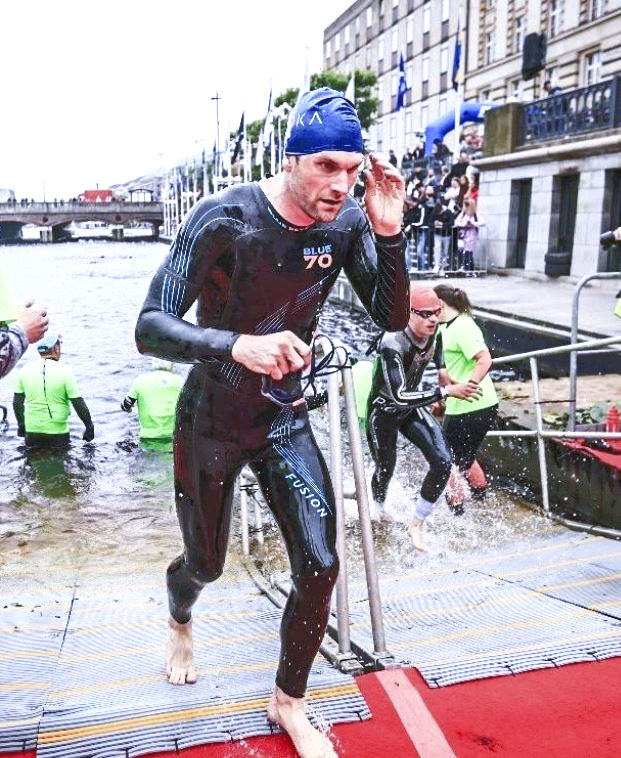
The swim is the highest-risk place to play it too early. A fast start, cold water, poor positioning, contact with other swimmers and anxiety can all push effort above threshold before the race has properly begun. Breathing is also restricted by the stroke cycle, and you may breathe only around a quarter as often as you would while running.
This makes it easier for oxygen demand to exceed oxygen supply, particularly at the start of the race, and can leave you recovering during the opening section of the bike.
For this reason, I believe the swim in a triathlon should be aerobic. You should come out of the water feeling that you have raced efficiently, not that you have already used your hardest effort.
In races lasting longer than one hour, my rule is to avoid deliberately crossing LT2 until you reach the point where you believe you have approximately one hour of racing remaining.
In a sprint triathlon, that may mean beginning to use harder efforts during the later part of the bike. In longer events, it means being far more patient.
During an Ironman, I would not deliberately cross LT2 until the closing stages of the run. There may be occasions when a hill or short surge forces you over it, but those efforts are not free. Repeated spikes above threshold on the bike can have a significant effect later, particularly during the marathon.
If an athlete uses up all of their available minutes above LT2 too early, they do not suddenly stop, but their ability to produce hard, controlled effort falls away. Pace or power begins to drop, breathing becomes harder, heart rate stays high for the output being produced, and the athlete may struggle to clear the fatigue created by earlier surges. In triathlon, this usually shows up later: a swimmer feels flat on the bike, a cyclist cannot respond to climbs or changes in pace, or a runner is forced to slow dramatically. The athlete can often continue, but they are no longer racing efficiently and may spend the rest of the event paying for effort used too soon.
The athlete who protects this reserve early still has the option to use it late. The athlete who spends it during the swim or on the first few climbs may discover that the joker card has already been played. Want to swim more efficiently in your next triathlon?
If you often come out of the swim feeling more tired than you expected, your pacing may not be the only thing costing you energy. Technique, body position, breathing and stroke timing can all affect how hard the swim feels, and how much you have left for the bike and run.
Our swim analysis sessions help you understand what is happening in your stroke, where energy is being wasted, and what to focus on next so you can swim more efficiently on race day.


Comments